

The Chicken Road Demo gives new players a low-pressure way to understand how the game moves, how fast decisions come up, and how the pace changes as the round develops. It is especially useful if you want to see the rhythm of play before you think about any real stake. Because the demo mirrors the structure of the live game, it can reveal where tension builds and where timing matters most. This page breaks down the demo experience, the main features, and the claims people make about tools like bots and predictors.
A lot of search interest around Chickenroad Demo comes from players who want practice, not shortcuts, so it helps to separate useful learning tools from exaggerated claims. You will find a plain-English look at typical demo play, risk levels, and how a practice session differs from a real-money session. The page also explains why terms such as predictor, signal bot, or hack are usually marketing language rather than reliable game strategy. If you are exploring Chicken Road Game Demo content for the first time, this guide keeps the focus on safe and informed play. Learn more about Chicken Road Casino.

Chicken Road Demo Play: What Happens in a Typical Session
A first look at Chicken Road Demo Play usually shows a short, repeatable round structure with no financial pressure attached. You open the demo, watch the round begin, and then decide when to continue or cash out based on the game’s pacing. The main value is not a big win screen, but the chance to learn how quickly the tension rises. That makes the demo useful for players who want to understand rhythm before they worry about stakes.
Most people use the Chicken Road Game Demo to get comfortable with timing and to see how often they want to stop versus push further. The flow is simple enough to repeat, which makes it easier to notice patterns in your own decisions. Even without cash at risk, the round can still feel tense when the pace speeds up. That is exactly why a demo session can teach more than a quick glance at the rules page.
How does a demo round usually unfold?
In a Chicken Road Demo Game session, the opening moments are usually calm, with the early part of the round feeling low risk and easy to follow. That early stretch is where players learn the interface, see how the action begins, and decide how much attention they need to pay. The feeling changes fast once the round starts moving toward higher-pressure decisions. In practice, the demo teaches you the pace more than any written rule ever could.
A useful habit in Chicken Road Demo Play is to watch the same opening phase several times instead of rushing through it once. Repetition makes the timing clearer, and it gives you a sense of when the round becomes more demanding. The demo does not remove the pressure of decision-making, but it removes the cost of mistakes. That makes each restart part of the lesson rather than a setback.
What should you notice before the first cash decision?
The first thing many players notice in Chickenroad Game Demo mode is that the screen can create urgency even when no money is involved. That urgency is useful because it shows how the game can influence decision speed in a real session. If you pay attention to how the round feels rather than just what it shows, you learn more quickly. The best takeaway is usually your own reaction to the pace.
Another thing to watch in Demo Chicken Road play is whether you naturally wait too long or stop too early. Those habits matter because they shape your choices once the stakes are real. A demo is the right place to spot those tendencies without pressure. If you can name your own pattern, you are already using the session well.
A typical Chicken Road Demo session often follows the same practical sequence, which makes it easy to review what you learned after each run.
- Launch the demo mode and spend a moment checking the layout, buttons, and round indicator before any action starts.
- Observe the opening pace so you can see how quickly the round begins to tighten and where your attention naturally goes.
- Make a decision point for yourself, even if the demo does not force one, so you can practice timing instead of just watching.
- Restart the round after a loss or cash-out moment and compare how your decision felt on the next try.
- Use the repetition to notice whether Chicken Road Game Demo play makes you patient, impatient, or overly cautious.
That kind of simple routine turns Chicken Road Demo Play into a useful practice loop instead of random screen time.
Chicken Road Game Demo Features, Rules, and Risk Levels
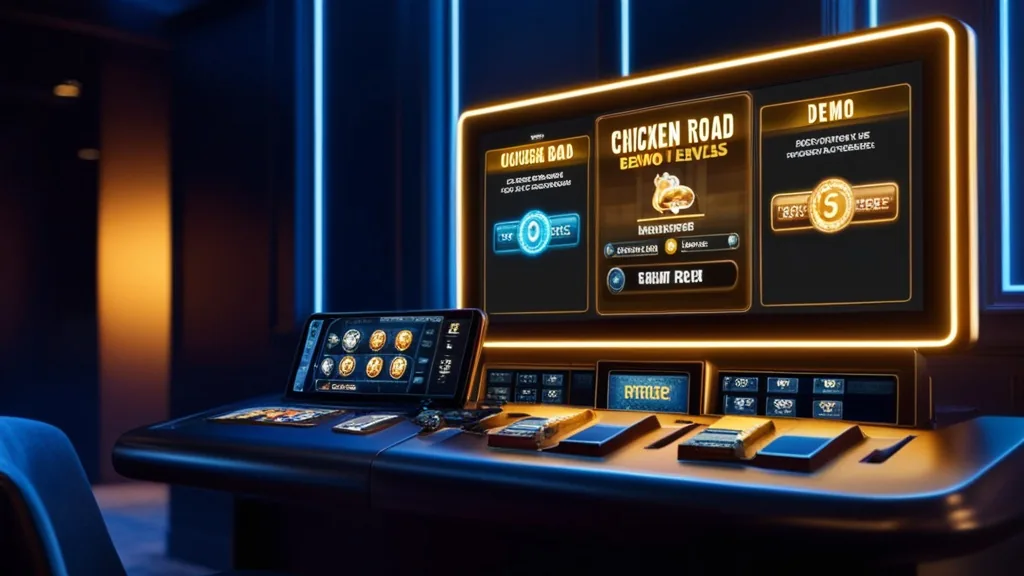
The most obvious difference in Chicken Road Game Demo mode is that the stakes are removed, but the pace and decision points still matter. That makes the demo useful for checking how the game behaves without having to focus on money management at the same time. You still see the same kind of tension curve, which is why the practice version can feel surprisingly close to the live one. For many players, that close match is the whole reason to use Chicken Road Demo Game first.
Risk levels are easier to understand when you can repeat a round without consequences, and that is where Chicken Road Demo becomes especially practical. The demo lets you feel how fast the session can accelerate and how quickly impatience can turn into a bad habit. It also gives you a clean view of the interface, so you can judge how much control you really have at each stage. In other words, the demo teaches awareness before it asks for commitment.
What is different in demo mode compared with real play?
In Chicken Road Demo Game play, the mechanics are meant to teach, not to pressure you with a real bankroll decision. That means you can test the game loop, explore the pace, and restart as often as you want. The core feeling is still there, but the emotional cost of a mistake disappears. This is why many players use the demo as a warm-up before anything else.
The useful part of Chicken Road Game Demo is that it reveals how you respond to repetition. Some players get calmer with each run, while others become more impulsive because the lack of real loss makes them careless. Both reactions are important to notice. A demo is most valuable when it shows you your habits honestly.
How do risk levels affect the feel of the session?
Even in Chicken Road Demo Play, a higher-risk section can feel urgent because the round gives you less room to hesitate. That tension is part of the design, and it is what makes the game interesting to study. The closer you get to the risky part of the round, the more important your own discipline becomes. A demo session is therefore useful for learning emotional control, not just mechanics.
Players who treat Chickenroad Demo as a training tool usually notice that risk is not only about money, but also about timing and attention. A bad decision can happen in a demo just as easily as in live play, even if the penalty is only a reset. That makes the practice round a good place to test your reaction to pressure. It is much easier to learn from a reset than from a costly mistake.
If you want to judge Chicken Road Game Demo risk levels sensibly, these checks help keep your attention on the right details.
- Watch how quickly the round changes from relaxed to pressurised, because pace often shapes decisions more than the rules do.
- Notice whether your hand moves faster than your judgment, since that is a common sign of rushed play in Chicken Road Demo mode.
- Compare your comfort level at different points in the session so you can see where impatience starts to take over.
- Use each restart to test one small change at a time, rather than trying to fix everything in a single run.
These simple checks make Chicken Road Demo Game sessions more informative and less like random experimentation.
- Practice credits
- Lets you play without real-money exposure
- Round pacing
- Keeps the same short decision rhythm as the game
- Reset option
- Allows immediate replay after a round ends
- Visual feedback
- Shows the same style of tension and progression
Chicken Road Demo Game Versus Chicken Road 2 Demo Play

When people compare Chicken Road Demo Game versions, they usually want to know whether the second version changes the feel or just the presentation. A newer label can mean a visual refresh, a pacing tweak, or a slightly different interface, depending on who is offering it. The best way to judge the difference is to try both demos and see which one makes the rhythm easier to read. That direct comparison is more useful than guessing from a title alone.
Searches for Chicken Road 2 Demo Play often come from players who want to know if the newer version is more polished or simply different in name. The answer depends on the source and the build, so it helps to focus on what you can actually observe. Look at the round speed, the clarity of the screen, and whether the controls feel smoother. Those details tell you more than a marketing label ever will.
Is Chicken Road 2 a real change or just a different label?
In some cases, Chicken Road Demo Play comparisons show a true change in layout or pacing, while in other cases the difference is mostly cosmetic. That is why it helps to be careful with the version name and not assume every label represents a separate game. A small interface update can still change how comfortable the demo feels. For a player, comfort often matters as much as novelty.
If you test Chickenroad Game Demo and a version called Chicken Road 2 back to back, the main question is whether the decision points feel clearer. If they do, the newer version may be easier to learn from. If they do not, then the difference may be mostly visual. Either way, the demo is there to help you understand the rhythm before any live decision.
Which demo version should a new player try first?
A new player will usually get more value from the simplest Chicken Road Demo version because it makes the basic rhythm easier to see. Starting with the cleaner interface means you can focus on the timing rather than on trying to decode a busy screen. Once that feels familiar, a second version becomes easier to compare. The goal is clarity first, not collecting screenshots of every build.
If Chicken Road 2 Demo Play is available and looks more polished, it can still be a good second step after you learn the basics. That way, the newer feel does not distract you from the game structure itself. The point of both demos is practice, so whichever version helps you read the round more clearly is the better place to start. Consistency matters more than chasing the newest label.
Chicken Road Predictor App, Signal Bot, and Prediction Hack Claims

Claims about a Chicken Road Predictor usually sound more precise than they really are, because a random game does not become predictable just because an app says so. Many of these tools use vague language that suggests control without showing any real method. If a product cannot explain how it works in a clear and testable way, that is a warning sign. The demo itself is a better place to learn the game than any promise of certainty.
Search traffic around Chicken Road Signal Bot and similar tools often comes from curiosity, but the claims deserve careful scrutiny. A bot may look impressive in a video, yet that does not mean it has genuine insight into future outcomes. In many cases, the marketing language is stronger than the product itself. That is why it helps to ask what the tool actually does before trusting any result.
Can a predictor app really know the next round?
A Chicken Road Predictor App may claim to detect patterns, but a claim is not proof. If a game depends on randomised outcomes, no app can reliably name the next result just by scanning the screen. At most, some tools may track your habits or your own choices, which is very different from predicting a round. That distinction matters if you want to avoid false confidence.
The safest approach is to treat any Chicken Road Prediction Hack claim as unverified until you have evidence that it works in a repeatable way. If the seller avoids clear explanation, that usually tells you enough. A real learning tool should help you understand the game, not promise to outsmart it. When certainty is sold too easily, caution is the right response.
Why should you be careful with bot and hack offers?
A Chicken Road Signal Bot can sound convenient, but bot-based offers often come with privacy, security, or fairness concerns. Some tools may ask for permissions they do not need, while others may simply be scams wrapped in technical language. Even if a tool does something visible, that does not mean it is safe or useful. A cautious player should look at the risks before the hype.
The phrase Chicken Road Predictor is often used to sell certainty where none exists, and that can lead players into unsafe downloads or unrealistic expectations. If a tool promises perfect timing, it is almost certainly overstating what it can do. The better habit is to rely on practice, observation, and the demo itself. Those methods may be slower, but they are also far more honest.
Chickenroad Game Demo: Safe Practice Before Real-Money Play

A good Chickenroad Game Demo session should leave you with a clearer sense of pace, risk, and your own decision habits. The whole point is to practice without pressure so that real-money play, if you choose it later, feels more deliberate. You can test your reactions, notice impatience, and learn how quickly the round escalates. That kind of learning is hard to get from screenshots or rule summaries alone.
Because Chicken Road Demo Play removes the financial side, it is easier to focus on discipline instead of outcome chasing. That makes the demo useful for building a simple routine you can repeat later. The key is not to treat the demo like a shortcut to profit, but like a rehearsal for better judgment. Once you think about it that way, the practice mode becomes far more valuable.
What should you practice first in demo mode?
Start with the basics in Chicken Road Demo: watch the opening rhythm, pay attention to how quickly the round develops, and notice when your attention starts to drift. Those first impressions matter because they shape your later choices. If you rush through the demo, you miss the main lesson. A calm first run usually tells you more than a dozen hurried ones.
It also helps to treat each Demo Chicken Road session as a single focus test rather than a long streak of random tries. For example, one session can be about timing, another about patience, and another about how you react after a reset. That makes the practice more useful and easier to remember. Small, specific lessons are usually better than vague impressions.
How do you know you are ready to move beyond demo play?
You are probably ready to move on when Chicken Road Demo Game sessions feel understandable rather than confusing. If you can describe the pace, name your common mistake, and stay calm through several rounds, the demo has done its job. Readiness is less about winning and more about understanding your own behavior. That is a much better sign of preparedness than chasing a lucky run.
A player who keeps using Chickenroad Game Demo mode well often notices that the screen no longer feels mysterious. At that point, the remaining question is not whether the game is playable, but whether you are making thoughtful decisions. If the answer is yes, the demo has given you real value. If the answer is no, more practice is usually the smarter move.